機械設計導論Introduction to Machine Design
生活中的機械 Machines Around Us
從汽車、遊樂設施、縫紉機、機械鐘到電梯,都是齒輪、連桿、彈簧、制動器等機械元件組合而成的系統。
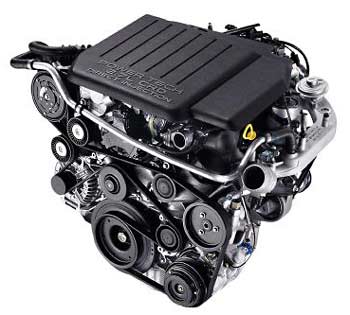
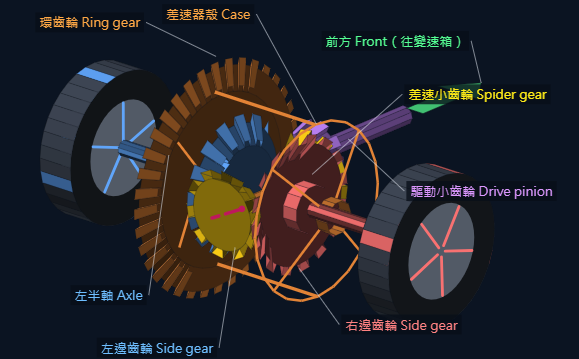
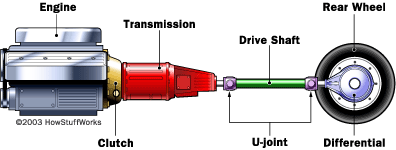
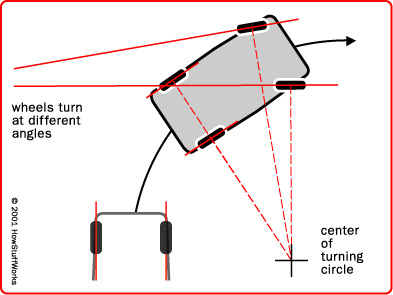
汽車傳動 Automotive Drivetrain
📖 延伸閱讀:How Differentials Work(HowStuffWorks)↗
雲霄飛車 Roller Coaster
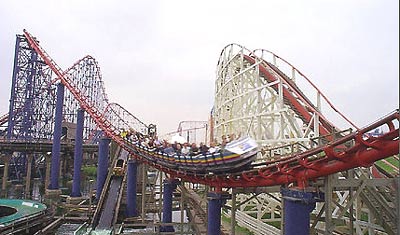
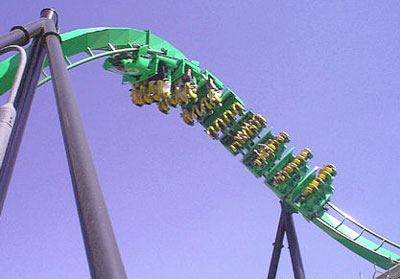
雲霄飛車除了第一座坡由鏈條拉上去,其餘全程沒有動力,靠的是位能與動能互換。下面的動畫依弧長逐步積分列車的運動方程式(重力沿軌道的分量+滾動阻力+空氣阻力),右上的長條把每公斤的能量換算成「高度」:俯衝時位能轉成動能、爬坡時再換回來,而摩擦熱只會一路增加,所以後面的坡一定比第一座坡矮。
- 迴圈為什麼是淚滴形?迴圈底部速度最快,若用正圓,底部的向心加速度 \(v^2/R\) 會大到 6 g 以上;把底部曲率半徑加大、頂部縮小,底部降到 4 g 出頭,頂部速度慢也還能維持正的 g 值。
- 騰空時刻(airtime):通過駝峰頂時 \(v^2/R > g\),乘客的 g 值變成負的,身體會離開座椅,由安全壓桿擋住。
- 上止輪:車輪從軌道上、下、側面夾住鋼軌,所以就算 g 值變負(例如把滾動阻力調大,迴圈頂速度不足),列車也不會脫軌。
縫紉機 Sewing Machine
縫紉機最關鍵的是「針在布的上面、梭在布的下面,兩邊卻要把線綁在一起」。家用與工業平車用的是鎖式線跡(lockstitch):上線與底線在布料中間互相扣住,所以布的正反面看起來一樣。另一種是單線鏈式線跡(chain stitch):只用一條線,布底是一串互相套住的線圈,縫得快、有彈性,但拉住線尾一扯就會整條脫開(米袋封口就是這種)。下面的動畫可切換兩種線跡比較。
這些動作都來自同一根馬達。上軸一轉就是一針:上軸前端的曲柄帶動針桿與挑線桿,上軸再經正時皮帶帶動下軸,下軸以 2:1 齒輪帶動旋梭、以兩個偏心輪帶動送布齒。各機構的先後順序(時序)必須精確配合:針要在旋梭尖經過時剛好略為上升,送布齒只能在針離開布料時送布。
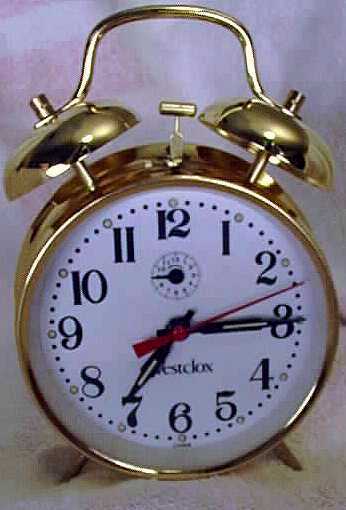
機械鐘 Mechanical Clock
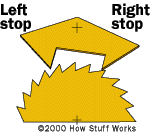
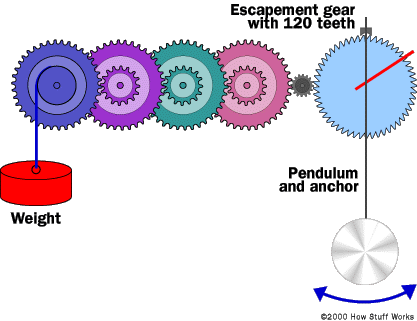
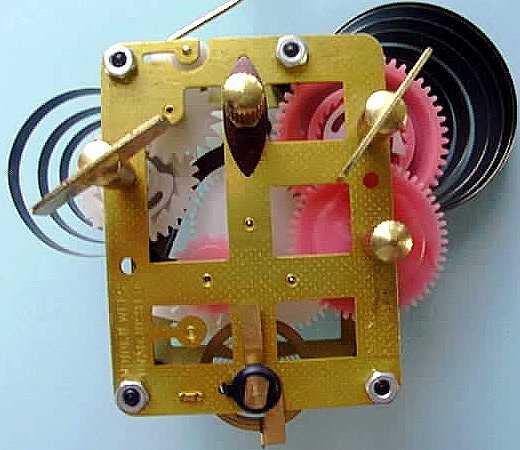
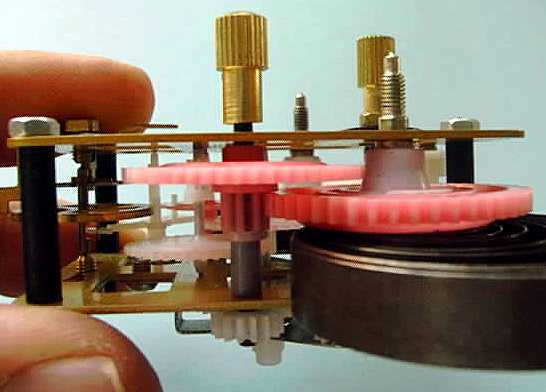
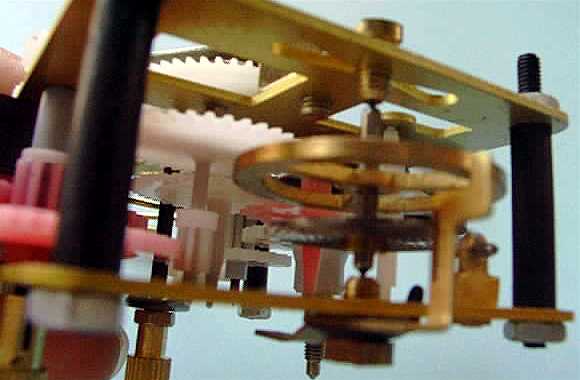
機械鐘的心臟是擒縱機構(escapement):重錘(或發條)讓齒輪系一直想轉,擺錘則以固定週期擺動,擒縱叉每半次擺動只放走擒縱輪半顆齒,把「一直想轉」變成「一格一格地走」。同時,輪齒在擺通過中央時推一下擒縱叉的斜面,補回擺因摩擦損失的能量,所以擺不會停。擺的週期 \(T = 2\pi\sqrt{L/g}\) 只與擺長有關,擺長 0.994 m 時 \(T\) = 2 s,就是常見的「秒擺」。
電梯 Elevator
電梯有兩種常見的驅動方式。曳引式用鋼索繞過機房的曳引輪,一端吊車廂、一端吊配重,靠鋼索與輪槽的摩擦帶動;配重抵銷了車廂和約一半的載重,馬達只要負擔兩邊的差值。液壓式則讓車廂坐在柱塞上,用泵把油打進油缸頂起車廂,結構簡單但行程有限、下降時的位能全變成熱。切換下面動畫的兩種模式、調整乘客重量,比較所需的力與功率:
就算鋼索真的斷了,電梯也不會一路摔到底。井道頂的限速器由一條獨立的鋼索帶著轉,轉太快時離心飛錘張開、勾住棘齒,讓這條鋼索停住;車廂繼續往下,就把車廂底的安全鉗楔塊拉進斜面座、夾死導軌。這套機構完全是機械式的,不需要電:
門機也有機械巧思:一條皮帶讓兩扇門反向移動,車門的門刀在停靠時才勾住層門,所以車廂不在時層門一定鎖著;光幕被遮斷時門會立刻反向重開。
問題解決 Problem Solving
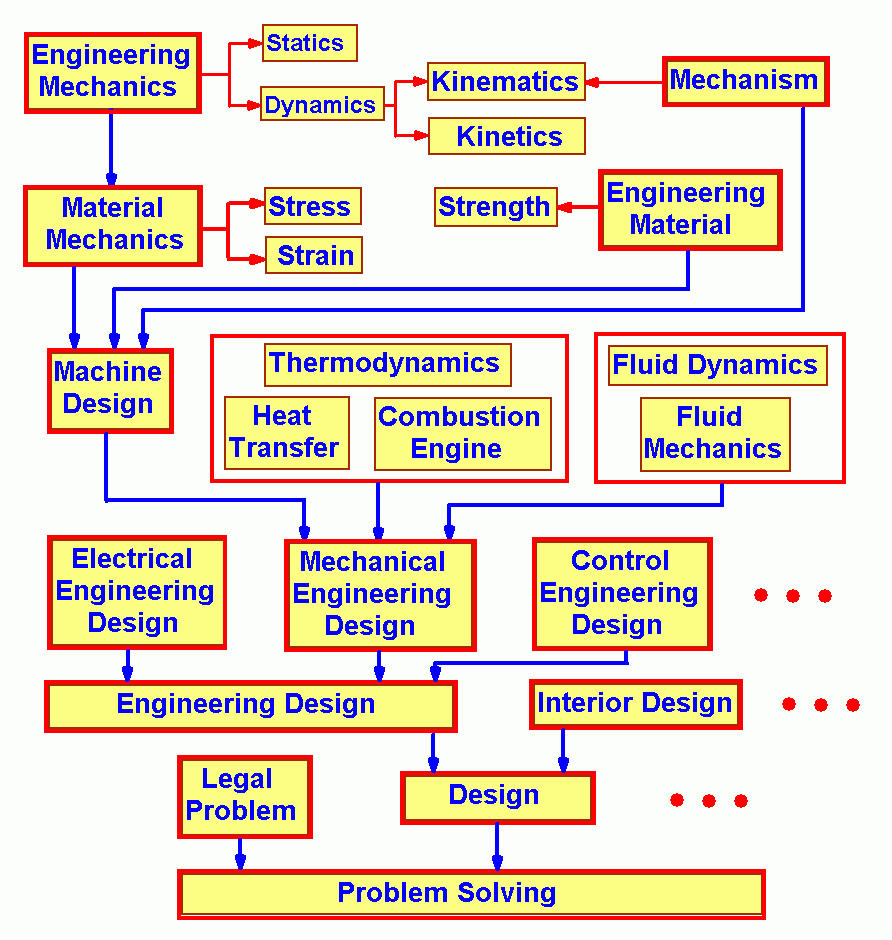
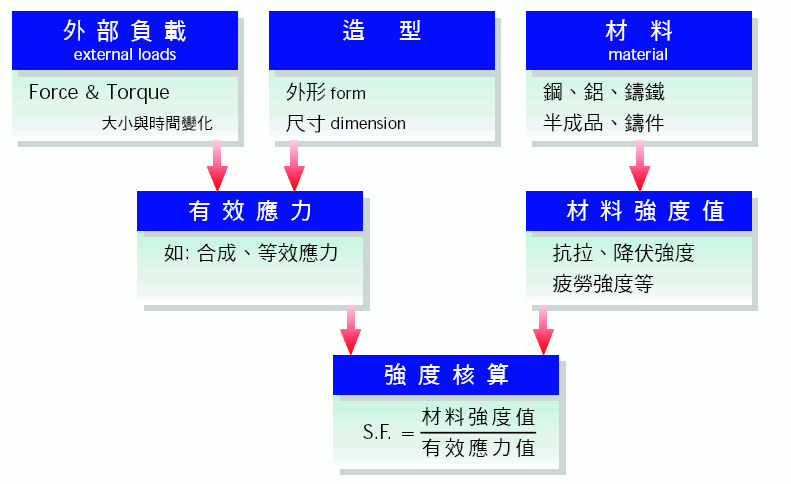
- Problem solving is used by professionals from different fields in the normal course of their work.
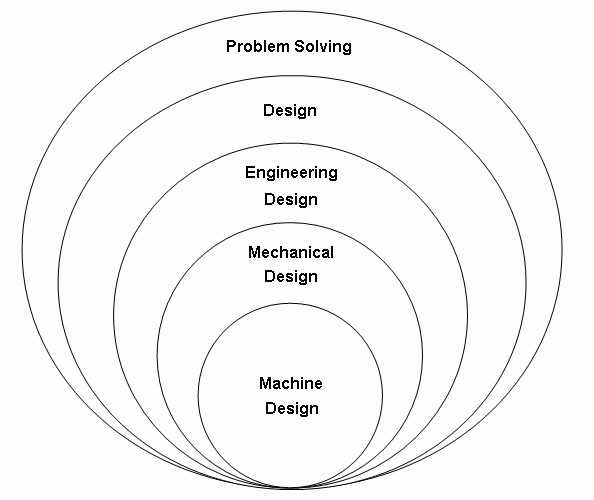
- The organization of problem solving is a hierarchical domain.
工程設計 Engineering Design
工程 Engineering
Engineering is the profession in which knowledge of mathematical and natural sciences gained by study, experience and practice is applied with judgment to develop ways to utilize, economically, materials of nature for the benefit of mankind.— Accreditation Board for Engineering and Technology (ABET)
- Engineering attempts to go from theory into practice for the purpose of developing products and processes instead of merely observing the phenomena of that science or art.
- A physicist studies and records findings in order to understand some phenomenon or physical process better.
- An engineer utilizes scientific information to make a particular process or product for use by customers.
設計 Design
What is design? The Concise Oxford Dictionary explains design as “a mental plan, a scheme of attack, end in view, adaptation of means to ends, … preliminary sketch for picture, … invention.” Evidently there is a lot more to design than mere visual aspects, and design is not restricted to engineering. Key components of this explanation are as follows:
- Means to ends implies that we design not for the abstract mental exercise, but with a definite goal in view — some action or some physical object (artifact) will result from the design.
- Mental suggests that design is a thinking process. When we design we deal primarily with ideas, with abstractions rather than with numbers — and computers for example cannot do the job for us, though they can help in certain tasks. No matter what we design, it is vital that we develop and apply our imagination to visualize realistically the future form of the artifact or action, how it will eventually come into being and most importantly how it will thereafter interact with people and other artifacts or actions.
- Plan, scheme infers that design is distinct from implementation. Designers, especially in engineering, seldom execute their plans, but rather communicate them to others — either by word of mouth, or visually (sketches, engineering drawings, computer simulations), or through the written word. Again, note the lack of emphasis on numbers.
- Invention means just that, we are coming up with something NEW — at least partly. Creativity is crucial as we shall see later.
So, can we now define design completely? No! And neither do we need to. A rigid definition implies a rigid process, and design is anything but that. We shall adopt the following interpretation as it incorporates the above concepts and conveys a reasonably clear idea of what design is all about:
工程設計 Engineering Design
Engineering design is the process of devising a system, component, or process to meet desired needs. It is a decision-making process (often iterative), in which the basic sciences and mathematics and engineering sciences are applied to convert resources optimally to meet a stated objective. Among the fundamental elements of the design process are the establishment of objectives and criteria, synthesis, analysis, construction, testing, and evaluation.— Accreditation Board for Engineering and Technology (ABET)
- Solving a legal problem is not design.
- Interior design, which draws heavily on art rather than on scientific or engineering knowledge, is not engineering design.
- Within the domain of engineering design there are many sub-domains that relate to the different disciplines of the engineering profession.
- There are excellent design activities in other engineering fields, such as electrical, civil, and chemical engineering.
機械設計的範圍 Scope of Machine Design
- Mechanical engineering is divided into two stems: the energy stem and the structures and motion stem.
- Mechanical design applies to design in mechanical engineering systems in which both stems can be involved.
- The field of machine design is a subset of mechanical design in which the focus is on the structures and motion stem only.
- The design of heat exchangers, air compressors, and internal combustion engines involves mechanical design but not machine design, because those devices rely on the use of technical material from heat transfer, thermodynamics, and combustion. These topic areas are all related to the energy stem of mechanical engineering.
- The design of a gear box, a V-belt drive system, a carburetor linkage or a machine structure is clearly machine design because they draw on technical material from strength of materials, solid body mechanics, kinematics, and dynamics. This technical material is all related to the structures and motion stem of mechanical engineering.
設計流程 The Design Process
It is important that a rational method of design be understood by engineers. There are two reasons for this:
- A rational method of design helps engineers to manage their task when confronted with a vast amount of input information.
- The use of a common procedure for design greatly facilitates interaction among engineers.
The design process involves six steps as shown in the following diagram.
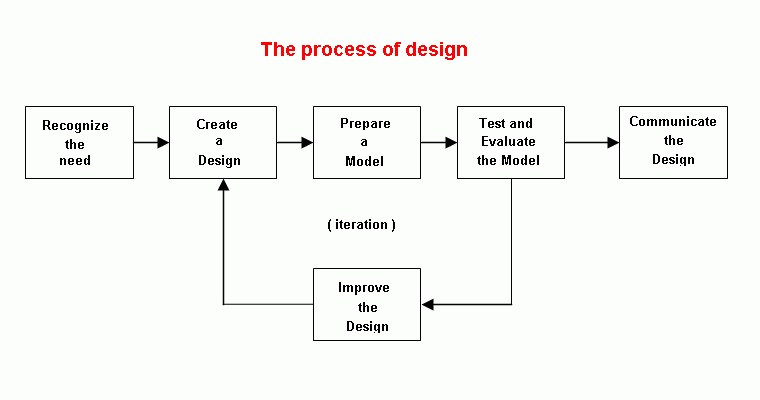
- Step 1:辨識需求 Recognize the needA carefully formulated statement of need can often save considerable time and energy later in the design cycle. Implied in any statement of need is an understanding of the real constraints on the problem. Once a statement of need is established, the designer would be well advised to review this statement periodically during the design process so that it can be revised if necessary.
- Step 2:構思設計 Create a designOnce the need has been clearly recognized and stated in a succinct way, the next step is to begin creating design ideas that will satisfy this need. Of all the steps in the design process, this one requires the most ingenuity and imagination.
- Step 3:建立模型 Prepare a modelOnce an idea has been created, it becomes necessary to find a means to evaluate the quality of that idea in satisfying the need requirements. One way to do this would be to build the suggested design idea. This procedure is usually impractical for reasons of cost, time, and effort. In order to conserve cost, time, and effort, engineers frequently make use of a simplified model to evaluate a design idea. A model may be real or abstract and may be anything from a simple mental image of the idea to a complex mathematical or physical reproduction of the proposed concept. A frequently used model is a mathematical equation that describes the physical performance of the part.
A designer must understand that all models are only approximations of a physical phenomenon. It is thus important to know when a model is robust enough to give meaningful results. An understanding of significant figures in calculations is also highly important to performing design analysis.
- Step 4:測試與評估模型 Test and evaluate the modelOnce the model has been prepared, it is time to evaluate the proposed design idea by exercising the model. The testing usually involves judgment. In the case of a mathematical model of a physical phenomenon, the engineer will put values into the equations and look at the results. What becomes obvious as a result of this type of model is that it is important for the designer to become proficient in the manipulation of mathematical models and that a good system of documenting the solution process is highly desirable. It is for this reason that spreadsheet calculation is sometimes used to solve problems in machine design.
- Step 5:改良設計 Improve the designAs a result of the tests performed on the model, the engineer should have a quantitative measure of the success or failure of the idea. The engineer is likely to know whether the idea should be abandoned or whether it should be retained for further improvement. One of the fortunate results of testing and evaluation is that this process often provides considerable insight into where improvements can and should be made. Thus, this step leads back to the creation step. Since a number of different design ideas may be tried, modified, and improved before a final design choice is made, the process is iterative.
What is important to realize is that the design process may yield many workable solutions or no solution at all. This characteristic is one that makes design problem solving quite different from most engineering science problems, where there is often only one right answer.
- Step 6:傳達設計 Communicate the designNo matter how well a design may satisfy a particular human need, it cannot be converted into a useful product or process if the details of the design are not communicated to those who will implement its use. Thus the communication step is a very important part of the design process. Communication of engineering design ideas may be by written words, spoken words, or by pictures, graphs, or drawings.
設計階段 Stages of Design
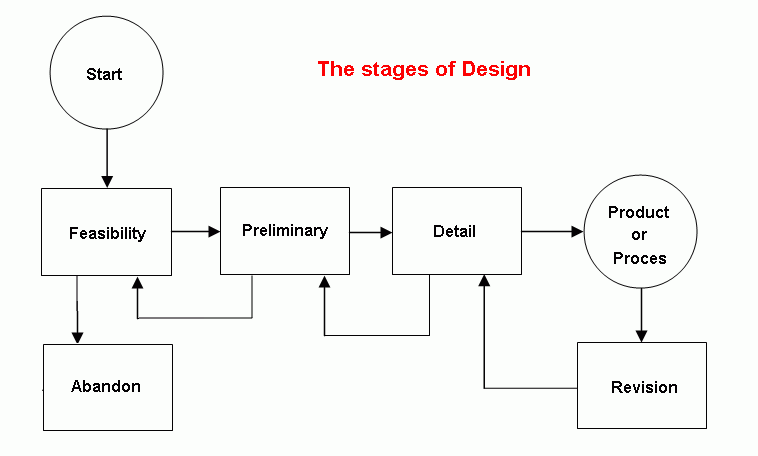
- Stage 1:可行性階段 Feasibility stageThe first stage determines whether it is both possible and profitable to undertake a given engineering project.
- The models for this stage tend to be based on economic theories, market surveys, and the opinions of authorities.
- The output of this stage will generally be a recommendation either to proceed or to abandon the project.
- Stage 2:初步階段 Preliminary stageThe purpose of the preliminary stage is to make qualitative judgments about the types of components and resources to use in meeting the conceptual need identified by the feasibility study.
This stage usually calls for the designers to select the kinds of components that will be used to make the product or process. The selection process involves studying the trade-offs between alternative types of component hardware and raw materials. It is beyond the scope of this stage to select quantitative things such as dimensional size, critical geometry, color, or weight.
- Stage 3:細部階段 Detail stageThe communication output of the preliminary stage will form the basis for the need that requires the complete, detailed specification of the elements recommended for the final product or process. The tasks required for the completion of this stage of design will involve making quantitative design selections with respect to size, shape, orientation, color, etc. The modeling and testing parts of this stage often involve extensive calculations and experiments. The output of this stage is typically the manufacture of the product.
- Stage 4:修訂階段 Revision stageOnce the detail stage has been completed and the product or process has been placed in service, it may be found desirable to use field experience as a basis for further improvement of the product. This process is called the revision stage. Since the final product is available, it often becomes the model for evaluation during the revision stage. The revision stage is not always used in the design process.